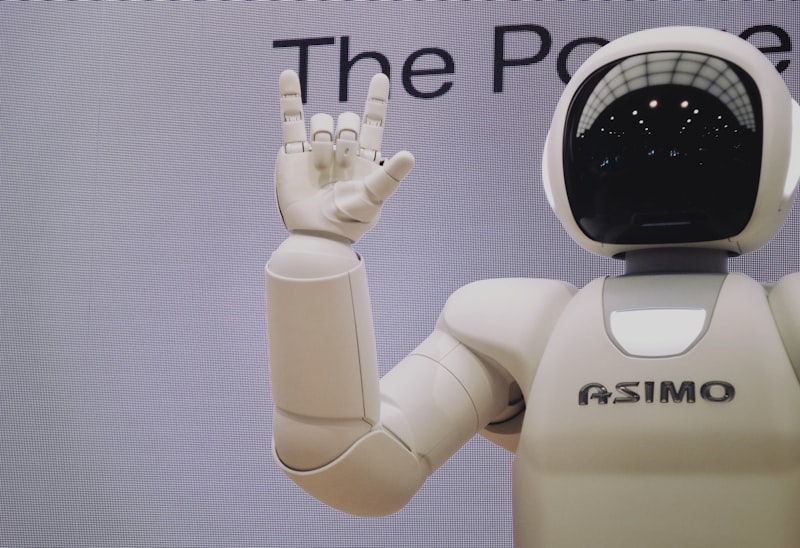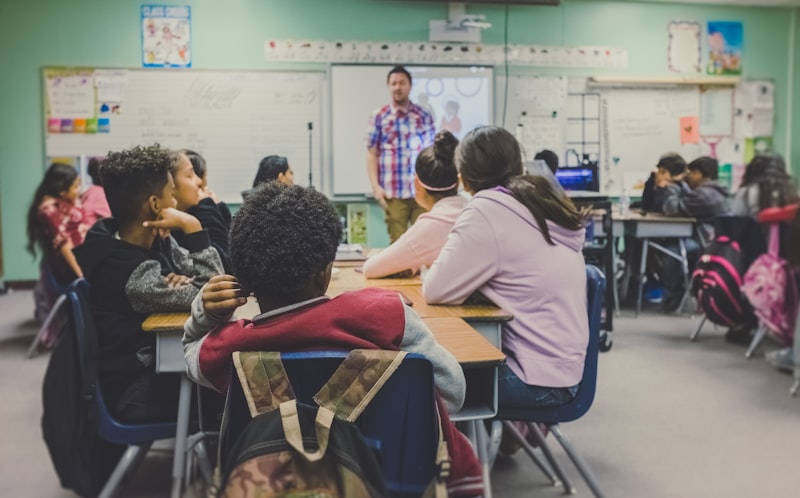
India's education system serves over 250 million students across 1.5 million schools, with dozens of languages and vast disparities in infrastructure. It is exactly the kind of complex, resource-constrained environment where AI can have the most outsized impact — not by replacing teachers, but by augmenting them with tools that personalize learning at a scale no human institution can achieve alone.
Personalized Learning at Scale
The most promising application of AI in Indian education is adaptive learning. Platforms can now assess a student's current knowledge level, identify gaps, and generate customized practice problems in real time. A student struggling with quadratic equations gets additional scaffolding, while a peer who has mastered the concept moves ahead to applications. This kind of differentiation was previously possible only with one-on-one tutoring — a luxury most Indian families cannot afford.
Breaking the Language Barrier
India's linguistic diversity is staggering: 22 official languages and hundreds of dialects. AI-powered translation and content generation can create high-quality educational materials in languages that have historically been underserved. Large language models fine-tuned on Indian languages are already enabling vernacular chatbots that help students study in their mother tongue — a critical factor in comprehension and retention.
The promise of AI in Indian education is not replacing the teacher in the classroom — it is giving every student the equivalent of a personal tutor at home.
Challenges to Navigate
Key challenges that need addressing:
- Digital infrastructure: Many rural schools still lack reliable internet and devices
- Teacher training: Educators need support to integrate AI tools effectively, not just access to the tools
- Quality control: AI-generated content must be vetted for accuracy, especially in STEM subjects
- Equity: AI must narrow the urban-rural divide, not widen it
- Privacy: Student data protection frameworks are still maturing in India
The organizations that will win in AI education are those that design for India's constraints — low bandwidth, multilingual users, and diverse curricula — rather than those that simply port Western EdTech solutions. NuclyAI is building with these realities in mind, creating AI learning experiences that work for the India that exists, not just the India that looks good in pitch decks.